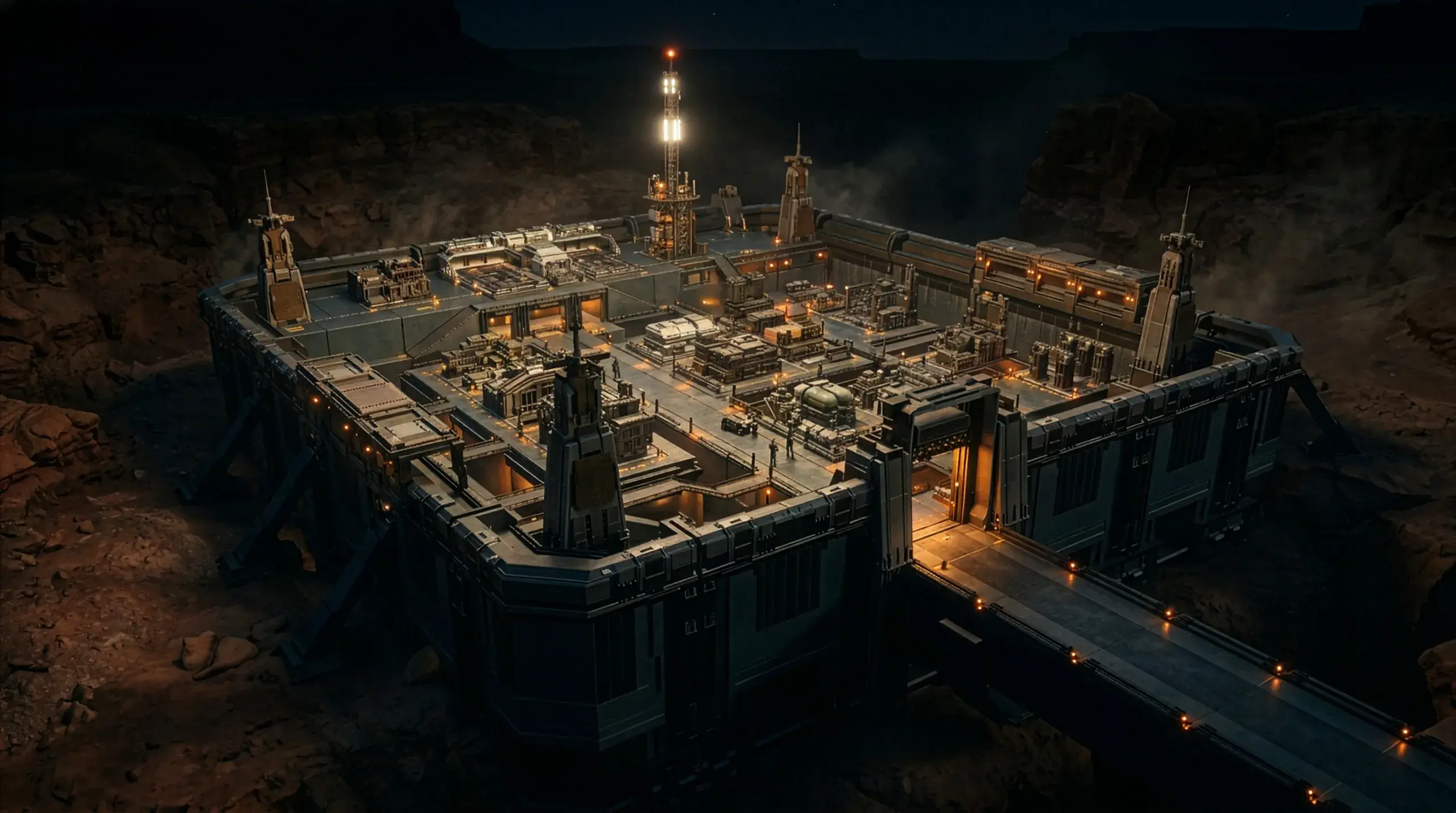
Parallel Studios' Colony: Survival is available on iOS and Android, bringing its science-fiction settlement game to the two main mobile storefronts. The release combines base management and combat with a colonist that responds to written conversations. Parallel's official product page confirms availability, while the Apple listing records version 1.0 on September 3.
The launch is a concrete new release from the studio behind Parallel's trading card game. It also gives players a chance to evaluate the practical form of a project previously discussed around autonomous agents and blockchain infrastructure. The available game deserves to be assessed through its documented features and current limitations.
A settlement to build and defend
The basic loop starts with restoring a Reactor and developing the surrounding base. Players recruit colonists, collect materials and expand their facilities. Parallel's September 6 overview describes two combat settings: defensive lane battles against enemies and attacks on other players' settlements through a world map.
That distinction matters when reading the feature list. The overview identifies player-versus-player colony attacks as live, while world-map attacks against computer-controlled colonies remain forthcoming. A player looking for the latter should not mistake the existence of lane battles for confirmation that every planned combat mode has launched.
Conversations add another layer to the settlement. Players establish their colonist's personality and can discuss decisions through a chat interface. Dilemmas allow custom responses for players with access to that option, introducing written suggestions alongside conventional choices.
Two different ways to make equipment
Parallel's new documentation separates cosmetic generation from practical crafting. Its September 9 Fabricator guide explains how a written description becomes a preview image and then an equippable three-dimensional cosmetic. The system uses an in-game resource called Weave.
The distinction is more than terminology. A generated helmet changes appearance; the guide does not present choosing its design as choosing a combat bonus. Players review the preview before producing the finished model and can adjust its fit afterward.
By contrast, Skipjack helps devise usable items for problems within the colony. According to the gameplay FAQ, those items require materials and enter a timed crafting queue. Morale and other bonuses affect completion speed, while materials can influence the chances of a higher-quality result without guaranteeing it.
These systems make different demands on the player. One centers on visual customization; the other remains tied to resource planning and production time.
What the release establishes for crypto gaming
Colony's earlier project paper described avatars with associated wallets and anticipated recording inventory updates on Solana. That document provides background on the project's blockchain ambitions, rather than proof that every proposed mechanism operates in the mobile release.
The current product page emphasizes building, battles, conversations and generated gear. Our reading is that the clearest immediate development is a playable product reaching broader distribution. The launch alone does not establish token demand, item resale value or delivery of the earlier onchain design.
Early limitations remain visible
The Apple version notes acknowledge problems including some quest objectives failing to progress and colonist chat producing inaccurate or poorly contextualized responses. Those are developer-disclosed limitations, not findings from an independent playtest.
For players, they identify useful questions for the next updates: whether progression becomes more reliable and whether conversations consistently reflect the colony's situation. For the studio, the mobile release provides a public test of whether its AI features contribute to a durable strategy game beyond the novelty of generating an item.