*By Mira Vale, CryptoGamesNews Game Intelligence Editor*
Production with somewhere to go
Craft World's most interesting proposition is that a factory can serve two ambitions: expanding your own operation and supplying a construction project shared with other players. That gives resource planning a social destination, beyond watching an inventory counter rise.
This is an evidence-based review of official descriptions, the developer's store listing and documented mechanics, not a hands-on assessment. The editorial question is whether those systems form a coherent management game. Responsiveness, session pacing and long-term balance remain untested here.
What is available now?
The official Craft World site offers browser access and identifies Ronin as its network. The site's company information identifies VOYA Games GmbH, also named as developer on the Craft World Builder App Store listing.
That listing shows version 1.22.0 dated September 21, with bug fixes and stability improvements. This establishes recent maintenance, although the notes do not explain which systems changed. The review therefore does not assume that a mobile version number describes every browser feature.
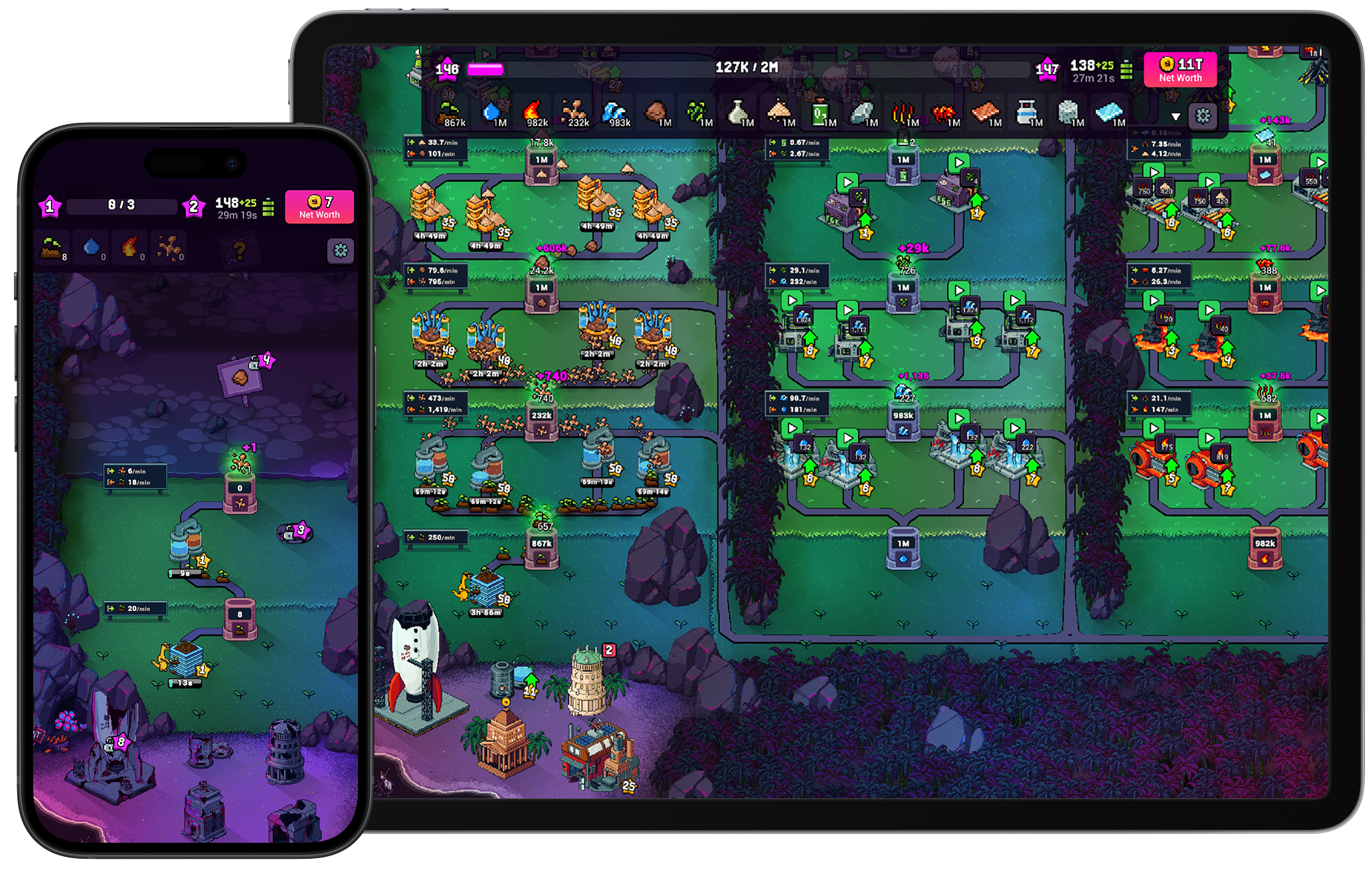
The store describes a simulation about dinosaurs rebuilding after a meteor impact. Gathering, crafting, research and automation form its progression, alongside production buildings and resource logistics. It is free to download with in-app purchases. These are documented features, rather than claims that the game has been personally played through.
Where the decisions come from
A beginner's guide hosted by Ronin, written by guest contributor Enefetero, explains how basic production expands into connected industries. Factories consume power, while the base adds generation and storage. The Exchange trades materials against DynoCoin, and crafting mastery improves material production.
Those relationships suggest a useful management problem: improving one part of a factory network can expose a weakness somewhere else. A larger output is less useful if the next recipe lacks an input or the operation cannot support its power demand. This is editorial interpretation of the documented systems, not a measured account of their difficulty.
The strongest potential is in choosing what to improve next. Research and automation can give repeated production a direction, provided the unlocks change decisions meaningfully. Public descriptions alone cannot establish how often that happens or how much waiting separates those choices.
Shared construction gives materials a destination
The official site describes Masterpieces as community constructions supplied with players' material tokens. It also explains that factories transform elements into materials used for those projects. The connection is straightforward: individual production supports a collective objective.
Editorially, this is a more persuasive reason to maintain a resource economy than ownership by itself. A shared build supplies a visible purpose for goods. It could appeal to players who enjoy contributing to a group without needing a coordinated combat session.
There is a corresponding limitation. Collective construction can turn into a contribution race if players care mainly about relative rewards. The evidence reviewed does not establish how satisfying participation is for a small producer, so equal influence across spending levels should not be assumed.
Ownership is part of the production model
The official site says Dynomite NFTs generate Fire or Water tokens that can support factory purchases and upgrades or move to a wallet. Ronin's guide additionally describes material trading through the Exchange. This makes the crypto connection relevant to production and distribution.
That structure deserves examination as a game system before any purchase. Different access to inputs can create interesting specialization, but can also make a newcomer dependent on other producers. No player-count estimate, trading-liquidity claim or expected financial return is established here.
The App Store lists paid options including passes, crystals and a Pro Account. Their presence is a confirmed monetization feature; their competitive impact requires testing. Free entry and equal progression are separate questions.
Who is it for?
Craft World's clearest audience is players who enjoy planning interconnected production and seeing resources contribute to a larger project. Its documented design offers both a personal optimization problem and a community purpose.
The reservations are market dependence, paid progression options and limited detail in recent patch notes. Players seeking direct action or a self-contained economy may find the premise less attractive. The editorial verdict is positive on the relationship between factories and shared construction, with the quality of the daily routine still requiring hands-on evaluation.