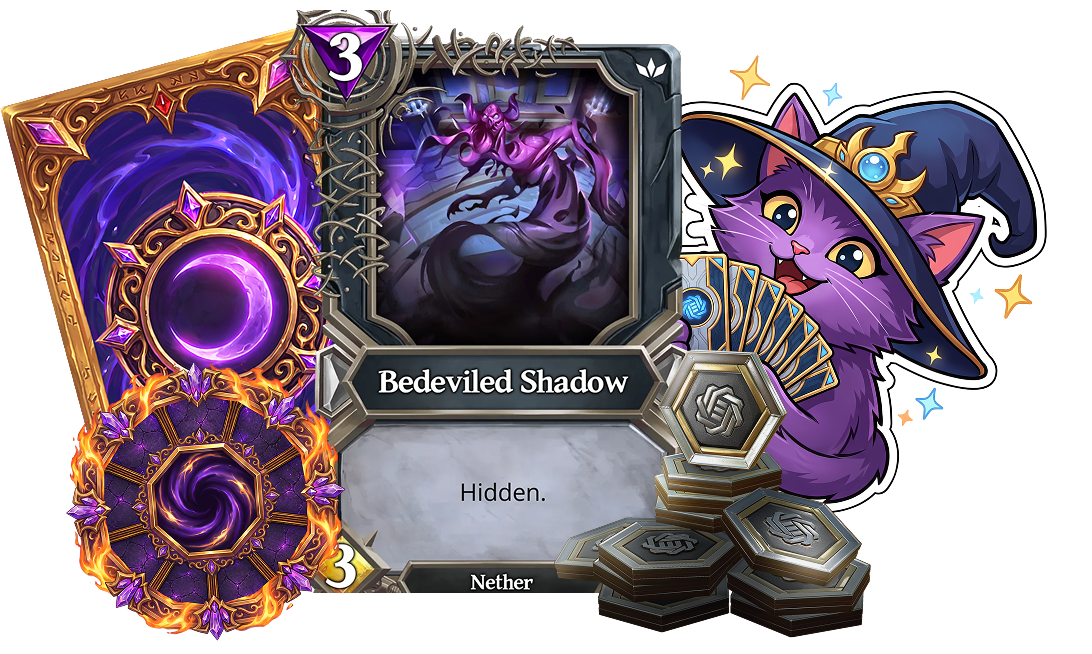
*By Mira Vale, CryptoGamesNews Game Intelligence Editor*
A live card game with an evolving ruleset
Gods Unchained offers a familiar starting point for strategy players: choose a deck, learn its interactions and test it against an opponent. The attraction is the room to refine those decisions over time. Its tradable collection adds another layer, but the evidence makes a stronger case for investigating the card game than for approaching it through token rewards.
This is a review of documented features and the current service, checked on September 18, 2026, rather than a report of hands-on play. The Epic Games Store listing identifies Immutable Games Studio as developer and Immutable as publisher, with free access on Windows and Mac. Immutable Play also lists it as available. We did not independently test client stability or matchmaking.
The core loop: learn a deck, then improve it
The official introduction describes tutorial missions, solo practice against AI and competitive matches. Six starter decks provide a way to explore different gods before assembling a custom list. Playing grants experience, while levelling awards card packs that expand the available collection.
That sequence gives the design a useful learning structure. A supplied deck lets a newcomer concentrate on decisions within a match; custom construction later asks whether those decisions would improve with different cards. In editorial terms, the appeal is that preparation and execution feed into each other.
The official game page describes distinct identities across six domains. Death emphasises sacrifice and attrition, Nature develops a board of creatures, and War favours pressure. These identities suggest several routes into the same ruleset. They do not establish that every strategy is equally effective in the current competitive environment.
What the current season adds
The clearest recent activity signal is the Season 18 announcement, which describes a season running from September 11 through October 9. Its rewards include themed cosmetics, and the Whale track includes a Conquest Ticket. The post describes Conquest as a paid-entry mode for players at rank 10 or above, organised into five-game runs.
This is a meaningful extension for an established player, although its rank requirement limits its relevance to a first session. Our assessment is that the seasonal structure offers goals beyond improving a deck, while also making the progression menu more complicated. The announcement verifies ongoing operation; it does not establish how long an individual player needs to complete the pass.
The collection and blockchain layer
The crypto connection is substantive: the game supports tradable NFT cards and uses Immutable zkEVM. The team's current chain guide confirms that the game is live there and describes wallet-linked purchases of packs, battle passes and Sealed entries. Older references to Immutable X should therefore not be treated as current setup instructions.
For players who enjoy managing a collection, trading offers a route to changing its composition. It also introduces decisions beyond the battlefield. Account access, wallet linking and choosing the correct network become part of the experience for anyone using those features. This review makes no estimate of earnings or resale proceeds.
Strengths and limitations
The strongest documented quality is the connection between deck identity and specific tactical trade-offs. The Plague balance explanation discusses why delayed card draw, removal vulnerability and damage must be considered together when adjusting Ink-Stained Fingers. That transparency gives committed players useful context for understanding a change.
It also exposes a demanding learning curve. Evaluating a card means considering timing, competing options and what an opponent can do in response. As an editorial judgment, that should appeal to players who enjoy studying interactions, but may frustrate someone seeking immediate mastery. A growing collection further expands the decisions to learn.
Gods Unchained is best suited to card-game enthusiasts interested in repeated deck refinement and willing to understand its collection systems. The documented starter route provides a sensible introduction. Its long-term appeal will depend on whether the tactical decisions remain satisfying for the individual player; reward tracks and asset ownership cannot answer that question for them.