By Eric Newport, CryptoGamesNews Game Junior Editor
Worth the Grind or Just Another Web3 RPG?
Guild of Guardians makes its strongest case through the relationship between building a roster and finding a use for it. Collecting another hero is more interesting when that hero changes how a team handles a challenge. The documented design offers that possibility, although the quality of its balance still needs direct testing.
This is an evidence-based review checked on September 22, 2026, not a hands-on account. We have not tested combat responsiveness, progression speed or the experience of competing without purchases. Assessments below concern the published design and its likely tradeoffs.
The available game and the people behind it
The www.guildofguardians.com/news/what-is-guild-of-guardians identifies Mineloader as developer and Immutable as the company bringing the game to players. The live iOS store page lists a free fantasy idle RPG with in-app purchases under Immutable. Its visible version history lists 1.2.31; this review does not assume every platform has an identical client.
There is also a separate browser experience, Guild of Guardians Dungeons. Its August 26 early-access guide describes the Vanguard Server as playable, with server-specific progress, no paid purchases and no minting or burning of Dungeons NFTs. Those restrictions should not be confused with the mobile RPG's economy.
Building a team, then improving it
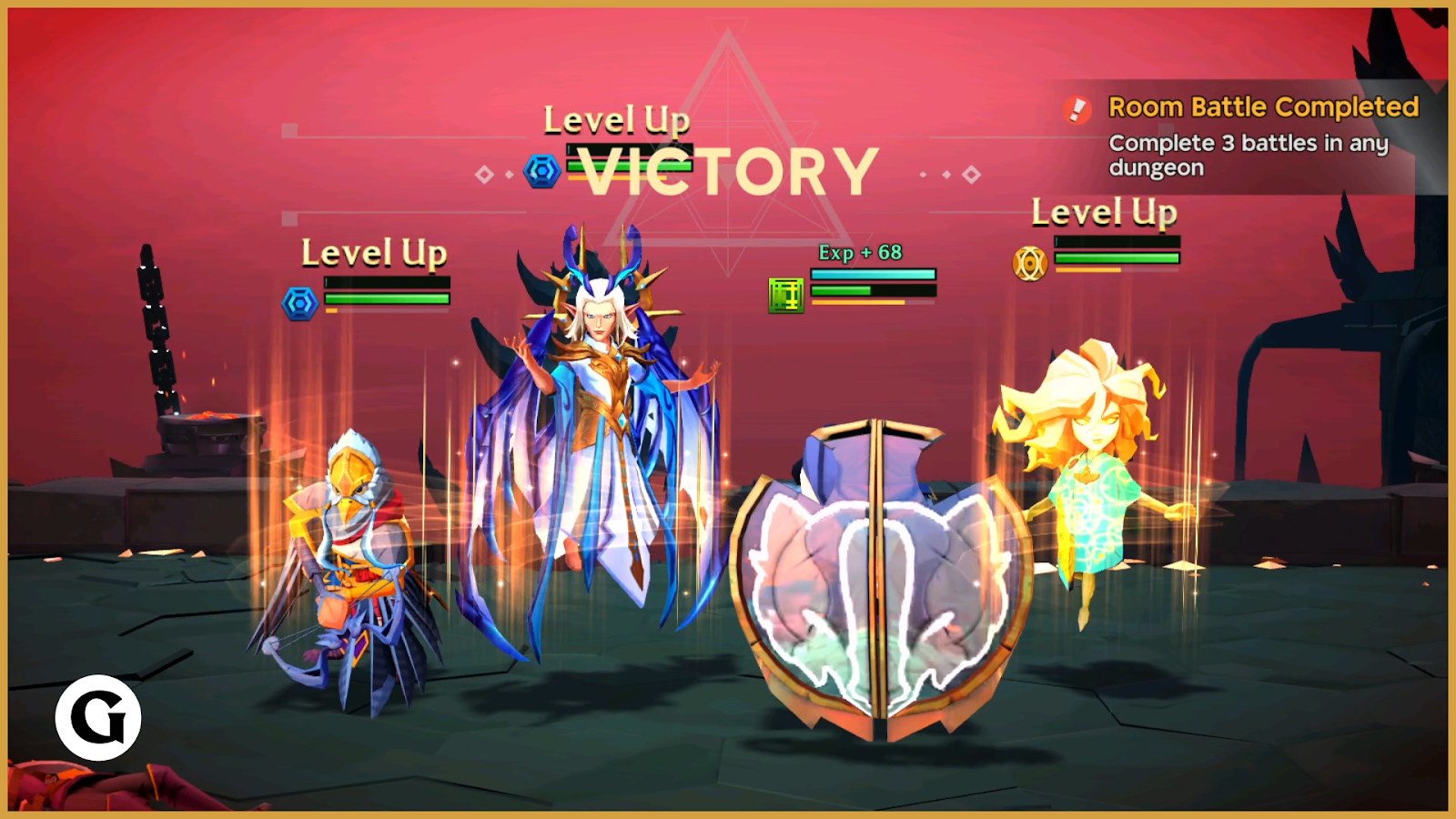
The https://www.guildofguardians.com/how-to-play describes a loop of dungeon battles, resource collection, summoning and equipment improvement. Guardians gain strength through levels and gear; crafting and merging support further customization. The appeal, in our assessment, lies in deciding where limited improvement resources will do the most good. Strengthening a complementary squad can be a more engaging goal than accumulating unrelated characters. Players who enjoy preparation and incremental optimization have a clear reason to investigate.
An idle RPG nevertheless needs enough meaningful decisions to make repeated runs worthwhile. Documentation establishes the systems, but cannot show whether ordinary encounters demand adaptation or mostly check accumulated power. That is an important unresolved distinction for players seeking active tactical control.
A calendar that rewards attention
The August seasonal guide outlines a five-week cycle, with four active weeks followed by a rest week. Featured summon banners rotate, while a season pass offers free and paid tracks. Arena modifiers change weekly, and guild activities occupy defined parts of the schedule. Editorially, this structure gives a growing collection several purposes and lets players plan ahead. Changing conditions can encourage experimentation rather than permanent reliance on one lineup.
The same structure can also make participation feel like an appointment. Someone returning after a break must understand both their roster and the current calendar. We cannot establish how much time competitive participation requires, or how comfortably a new player catches up.
Where the blockchain connection matters
The gameplay guide identifies Immutable zkEVM as the game's blockchain. It describes Ascension as converting a Guardian into a tradable Radiant Guardian NFT, with additional progression mechanics for Radiant characters. This is a concrete connection between collection and transferable assets. It does not mean every ordinary reward automatically becomes an NFT, nor does tradability establish reliable resale demand.
Our assessment is that players should first decide whether the underlying collection loop appeals to them. Ownership adds another layer of decisions, but it cannot substitute for satisfying battles or understandable progression. This review makes no claim about earnings, asset prices or market liquidity.
Who should consider it
Guild of Guardians is most relevant to mobile RPG players who enjoy developing squads over time and organizing their play around rotating challenges. Its documented strengths are connected progression systems and multiple reasons to revisit a roster. Its limitations are the demands of a crowded calendar and unanswered questions about competitive balance, spending pressure and repetition. The provisional verdict is a coherent collection RPG worth examining for its team-building structure, with a stronger recommendation dependent on direct testing of the everyday play experience.