*By Mira Vale, CryptoGamesNews Game Intelligence Editor*
A dungeon game with two overlapping pitches
Legends of Elumia is all about that classic RPG addiction: beat up monsters, grab better gear, level up, and repeat until your character looks like an absolute boss. It's the kind of adventure where you promise yourself "just one more dungeon" and suddenly it's 3 AM. Throw in some blockchain collectibles, and now your loot obsession comes with a little Web3 flavor.
But before you start planning your retirement around rare digital swords, there's something worth keeping in mind. The RPG side gives you familiar goals to chase, while some of the bigger blockchain ideas are still more about future plans than what's clearly available today. So enjoy the grind, chase that shiny loot, and maybe keep your crypto moonboy expectations on a short leash. Not every legendary drop is guaranteed!
This is an evidence-based review of official documentation and developer storefront material, not a hands-on test. Combat feel, server reliability and the pace of progression have not been independently tested.
What the current release establishes
The developer’s App Store listing identifies Triumph Games and offers the game for iPhone and iPad. Its release history lists version 1.19.4 on October 1, following the September 24 introduction of Season 4, Sands of Time. The hotfix notes concern wearing rings alongside jewelry, text corrections and cosmetic color variants.
Those dated releases establish activity within the last 120 days. The page describes a free download with in-app purchases. This review addresses that documented mobile offering and the wider game design; it does not assume identical features across every platform.
Studio attribution is supported by the official team page, which names Triumph Games among the project’s development partners. That distinction matters: the storefront developer credit and the wider Elumia development organization are related descriptions, rather than evidence that one company alone produced everything.
The loop: prepare, venture out, improve
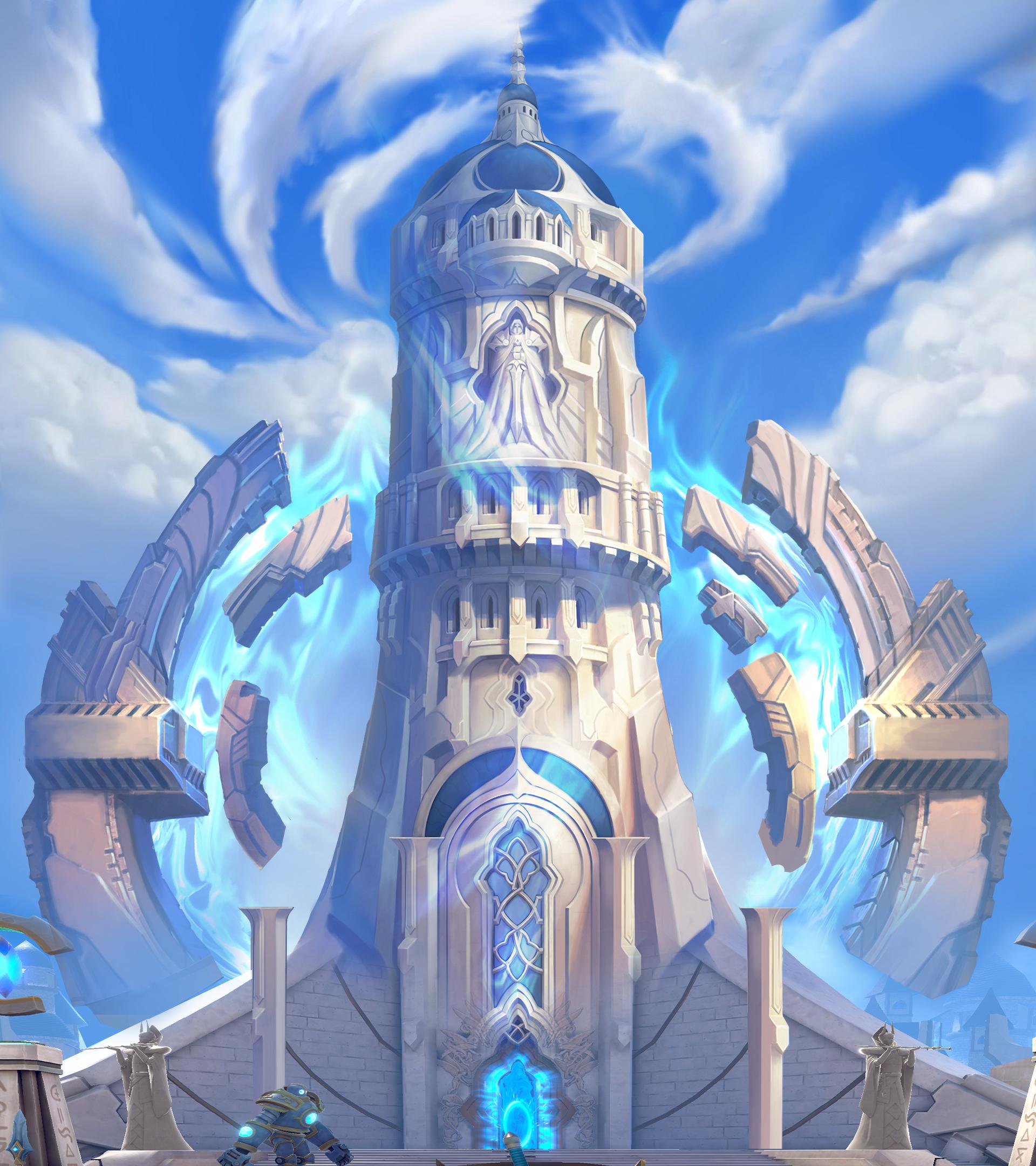
The Infinite Tower documentation presents the city as a place to meet other players, trade, obtain equipment and collect tasks. Portals lead into areas and dungeons where individuals or groups fight enemies and progress.
Editorially, that structure has an understandable rhythm. Preparation gives the expedition a purpose, while returning with useful items can make an unsuccessful or incomplete attempt feel productive. The important design question is whether equipment choices change how an encounter plays, rather than merely lifting a number high enough to pass it.
The documentation establishes the intended structure but cannot answer that balance question. It also describes additional city buildings as future plans. Housing and other proposed facilities therefore should not be counted as delivered features when deciding whether to try the game.
Progression and its competing incentives
The mobile description emphasizes gathering materials, crafting equipment, upgrading gear and developing character builds. Seasonal progression supplies another reason to revisit the same character. Those are clear goals for players who enjoy sustained improvement more than short, self-contained matches.
Our assessment is that this combination could suit an audience comfortable with repetition when it supports a chosen build. It is less persuasive for someone seeking a campaign with a firmly defined endpoint. Without playtesting, there is no basis to judge the amount of repetition required or whether fresh encounters arrive quickly enough.
Purchases introduce a separate question about progression pressure. Their existence does not prove poor balance, but the available material does not establish how comfortably a player can advance without them. This review therefore makes no claim that the experience is competitively equal or inexpensive over time.
What ownership does and does not establish
The official introduction identifies Solana as the network and describes ownership of characters and equipment. It also presents ELU as a governance token. This is a meaningful blockchain connection attached to a documented game, rather than a token standing in for gameplay.
The official website similarly emphasizes collectible characters and items, but broad ownership language is not a complete account of the current mobile workflow. Readers should distinguish a documented ecosystem feature from proof that every item can be exported from every client.
Editorially, the weakness is clarity. Before ownership becomes a reason to invest time, the relevant client needs understandable eligibility and transfer rules. The sources reviewed do not justify claims about dependable earnings, asset liquidity or the value of accumulated equipment.
Who should consider it
Elumia is most interesting for fantasy RPG players who enjoy preparing for dungeon runs and gradually refining equipment. Recent releases provide a credible reason to assess it now, and the underlying loop is easier to understand than its ownership messaging.
The verdict is conditional: evaluate the dungeon and crafting experience first. The evidence supports an actively maintained mobile RPG with a documented Solana ecosystem, while leaving combat quality, long-term balance and the practical reach of ownership open for further testing.