By Eric Pierce, CryptoGamesNews Game Intelligence Junior Editor
A card battler still changing its foundations
Forget staring at candlestick charts and getting liquidated by a random whale. Might & Magic The Card Game (aka Might & Magic Fates) brings a different kind of battlefield, where your hero is the CEO, your creatures are the workforce, and your spells are basically leveraged positions. One bad move and your entire strategy gets rugged faster than a meme coin after launch.
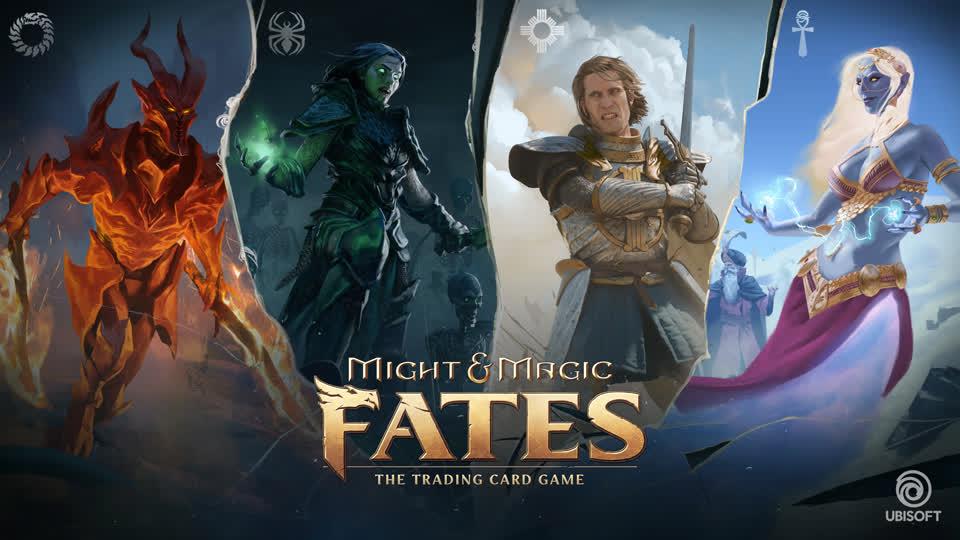
Developed and published by Ubisoft, this tactical card battler is all about building a powerful deck, combining heroes, creatures, and spells, and outsmarting opponents. Think chess meets crypto trading, except your portfolio has dragons and your stop-loss is a fireball.
The game is already playable in Steam Early Access, with ranked matches for competitive grinders and casual battles for those who have suffered enough losses in crypto. And unlike that Web3 roadmap promising "big things coming soon," Ubisoft has actually been shipping updates. The September 29 Sylvan update introduced a new faction and Stealth mechanics, while October 14's update 5.20 tackled bugs and performance.
Is this the next legendary card battler or just another deck full of hopium? We're digging into the official material to find out. No fake gameplay claims, no imaginary 100x returns, just an evidence-based look at what the game actually offers.
Where the tactical identity comes from
Ubisoft describes a resource system in which cards in hand generate gold used to power play. Heroes fight with their armies, equip artifacts and gain experience within battles to unlock abilities. Decks can include cards beyond the hero’s own faction. Positioning and timing are also part of the turn-based design. Ubisoft’s gameplay introduction
Our assessment is that this combination gives deck construction several connected questions. A useful card must fit the resource plan, support the hero and justify its place alongside competing options. In-battle hero growth adds another reason to consider when a strategy becomes effective. That is an attractive structure for players who enjoy revising a list between matches rather than simply collecting individually powerful cards.
The limitation is evidential: a rules description cannot establish whether different strategies are equally viable. We have not tested matchup balance, matchmaking speed or the quality of the interface. The design offers room for experimentation, but the breadth of that room in competitive play remains unmeasured here.
Progression has an unresolved access problem
Ubisoft’s support documentation says booster packs provide additional cards. Players can acquire packs using gold earned through games and quests, or through purchases with real money. This establishes a free progression route without telling us how long a particular deck takes to assemble. Card acquisition guide
The team’s October 16 community update acknowledges difficulty obtaining specific cards. It plans to end routine Card Rotation on November 2 and is developing crafting that would turn unwanted cards into resources for selected replacements, targeting release before year-end. These are announced changes, not features this review assumes are already available. Official community update
Editorially, targeted acquisition matters because a flexible deck builder loses some practical freedom when the missing component cannot be obtained predictably. The proposed crafting system addresses that tension in principle. Until it ships, it should not receive credit for improving the current collection experience.
What the blockchain layer actually contributes
The verified blockchain connection is Immutable-powered optional card trading. Ubisoft’s introduction identifies Immutable as the external marketplace technology provider. Its current support page states that NFT and ordinary cards perform the same gameplay function; the differences are aesthetic and the ability to trade NFT cards through services such as TokenTrove. NFT card explanation
That separates collectible ownership from additional card power. It does not demonstrate equal access to every desirable card, guarantee a buyer, or establish an earning rate. For this review, the meaningful benefit is optional transferability. We do not infer marketplace liquidity or current minting costs from the existence of trading support.
Who should consider it
This is most relevant to deck-building enthusiasts and Might & Magic fans who enjoy hero-led tactical experimentation and can tolerate an evolving collection system. The documented strengths are flexible construction, progression within battles and an optional ownership layer with functional parity between card versions.
Players who want a settled competitive environment or predictable access to a specific deck have stronger reasons to watch the promised collection changes first. Our provisional judgment is that the tactical foundation is more persuasive than the ownership pitch: evaluate the battles and progression on their own terms, then decide whether trading adds anything personally useful.