*By Mira Vale, CryptoGamesNews Game Intelligence Editor*
A game about preparing the next attempt
Nine Chronicles puts much of its decision-making before the fight. Its automated battles feed an equipment and materials loop, making it a better fit for players who enjoy planning incremental improvements than those seeking direct control of every attack. That is this review's editorial assessment of the documented design, not a claim based on hands-on play.
The official FAQ identifies Nine Corporation as developer and Planetarium Labs as publisher. This assessment covers the documented game and its currently available mobile edition, Nine Chronicles M. The official mobile listing shows a September 18, 2026 update, providing dated evidence of activity.
The current progression ladder
The latest entry visible in the official release notes is version 200490. It introduces Grade 9, called Ultimate, to Summon and Synthesis, with additional Runes, Auras, Grimoires, costumes and collections. The mobile listing's change summary also names Ultimate-grade additions. This is current-build context; the available evidence does not establish a release within the last day.
For an established player, another tier offers additional goals. For a newcomer, it makes the eventual progression ladder harder to understand at a glance. Neither conclusion establishes how long the climb takes or what a competitive account costs. Those questions require testing and account-level evidence that this review does not have.
Combat feeds crafting
The Adventure guide describes automated encounters in which preparation matters. Clearing stages supplies experience and materials; more demanding opponents lead to resources used for stronger equipment. Repeat functionality lets players revisit cleared stages for further rewards.
Action Points constrain stage entry, with replenishment through the game's Prosperity Meter or potions. The result is a loop of choosing a target, preparing equipment, spending available energy and deciding what to improve next. On paper, that gives short sessions a clear purpose. It also means someone who dislikes repeating content may find the structure wearing before its deeper systems become appealing.
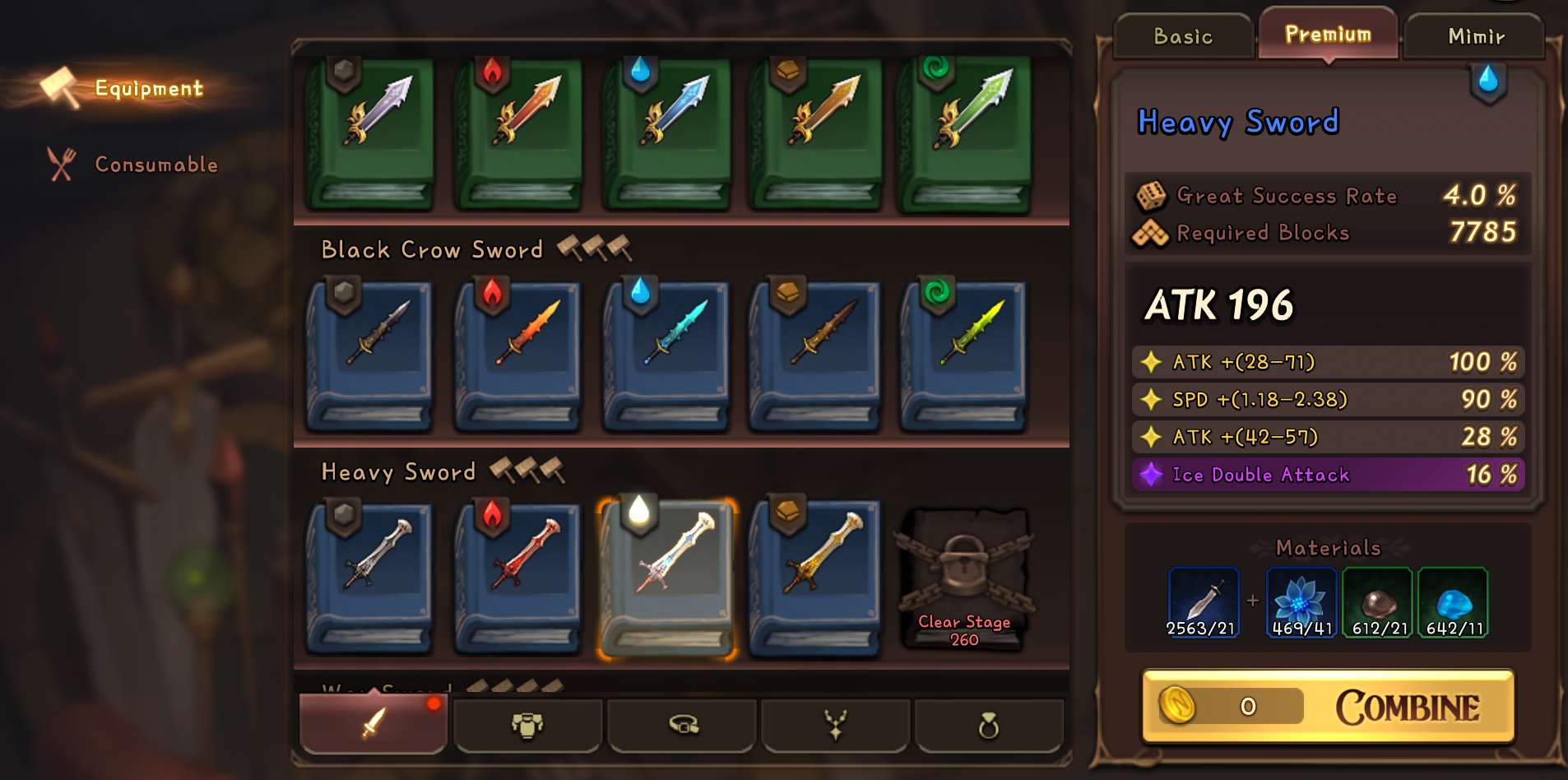
Crafting extends those decisions. According to the crafting documentation, campaign progress unlocks recipes, materials go into a crafting queue, and completion is measured in blocks. Secondary attributes can vary randomly. Our assessment is that these interlocking requirements give materials a useful role beyond filling inventory, although random results reduce the certainty of any particular upgrade attempt.
Collections create an opportunity cost
The Collection system lets players submit specified items for character-stat bonuses. Required submissions can include equipment, costumes, titles, food and materials. Submitted items are not returned.
That creates a meaningful planning question: which resources should go toward immediate equipment needs, and which should be committed to collection progress? We see this as a strength for methodical players because inventory decisions can shape longer-term growth. The limitation is additional bookkeeping. A player who simply wants to watch battles unfold may have little interest in comparing several overlapping routes to stronger stats.
Where the blockchain matters
The official FAQ places gameplay on the project's own blockchain, built with Libplanet, rather than on Ethereum itself. It identifies NCG as the game currency used for activities including crafting and trading. This is a substantive connection between the game and crypto infrastructure, beyond attaching a token to unrelated gameplay.
The economy should still be assessed as part of the game. This review does not estimate earnings, liquidity or asset values. A tradable item does not by itself establish that the time spent acquiring it is worthwhile.
Who it suits
Nine Chronicles is most promising for players who enjoy automated combat supported by resource allocation, equipment planning and persistent collection goals. Its documented strengths are the connections between those systems. Its likely friction comes from repetition, energy management and the effort needed to understand a growing upgrade ladder.
Start by judging whether that preparation loop is satisfying. The evidence supports an active game with a concrete progression structure; it does not support a verdict on device performance, connection reliability or competitive balance without direct testing.