*By Mira Vale, CryptoGamesNews Game Intelligence Editor*
A small deck with competing demands
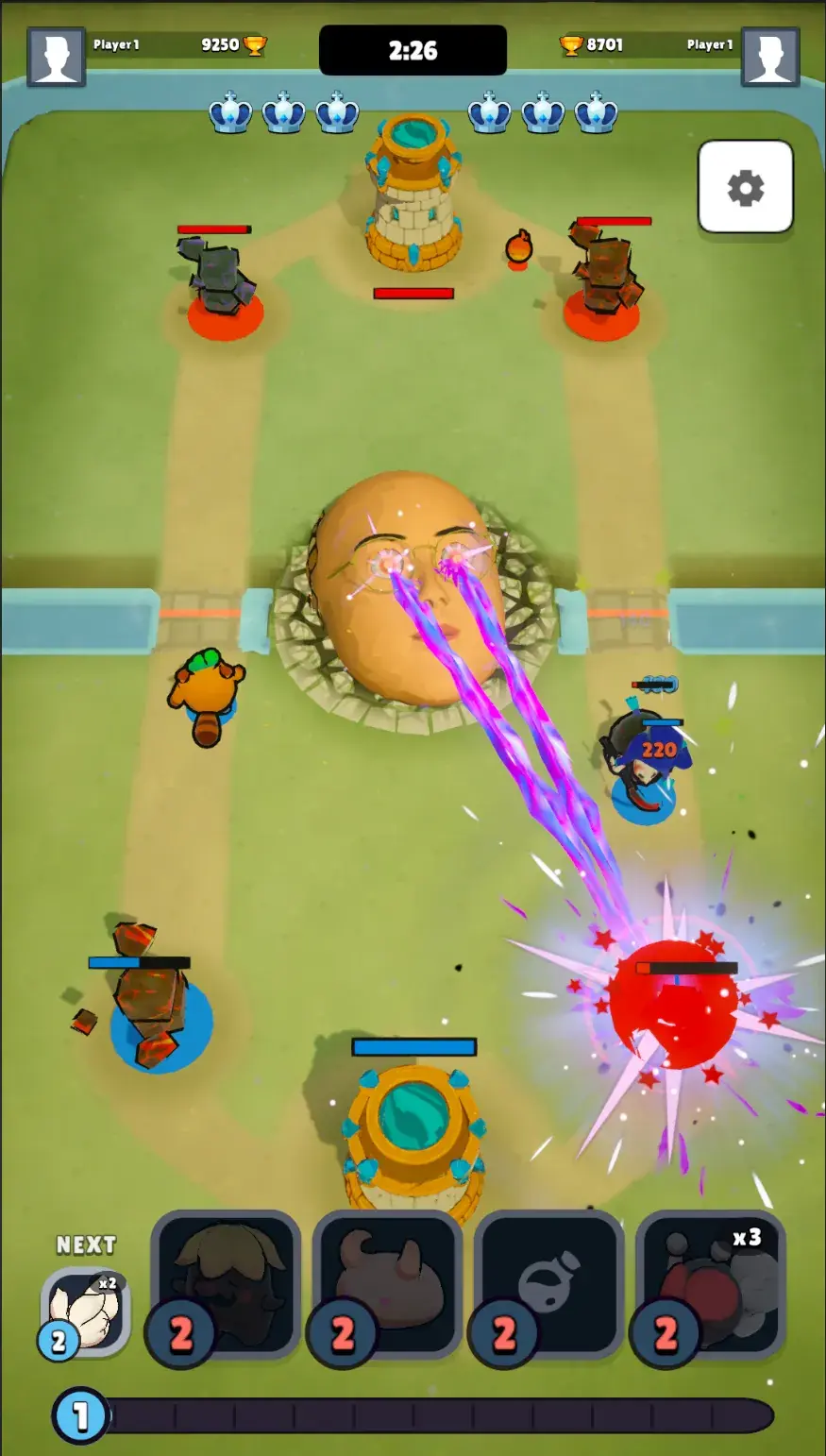
Nomgar Clash takes monster collecting, throws in some strategic chaos, and gives you two lanes to prove you're either a tactical genius or just another gamer making terrible decisions under pressure. Build your monster squad, launch attacks, and try not to blow all your resources like a crypto degen going all-in on a meme coin. One greedy move and your opponent might turn your brilliant strategy into a highlight reel of pure embarrassment.
The real fun comes from deciding when to go full attack mode and when to save enough firepower to defend yourself. With collectible monsters and two lanes to manage, there's always another way to outsmart your opponent or accidentally outplay yourself. It's a battle of brains, timing, and resisting the urge to YOLO everything into one push. Because sometimes the biggest boss fight is against your own bad decisions!
This is an evidence-based review of the current official website and documentation, not a hands-on play report. Match responsiveness, opponent quality and long-term balance have not been tested for this assessment.
The current game and its studio
Ronin's September 16 announcement identifies Nomgar Clash as a Moku game and confirms its browser launch. The official game site currently offers free browser play and an Android beta link. This review concerns the documented browser experience; it does not assume identical behavior across platforms.
The game is a real-time, one-versus-one card battler. Players assemble eight-card decks and attempt to destroy the opposing Nexus. The official site advertises three-minute matches plus overtime and a roster of 51 monsters. Ronin supplies the blockchain connection for its NFT features.
The recent launch and dated September documentation establish activity within this review's verification window. They do not establish an audience size or prove that matchmaking is consistently busy.
Decisions continue after deck selection
The battle guide describes resource management, deployment and card cycling alongside the structures players must attack. Units move and fight automatically after placement, while spells require a chosen target area. That leaves the player directing the encounter through timing and positioning rather than controlling every individual attack.
Editorially, this combination has a clear strength: a deck is both a plan and a limited set of responses. Spending heavily in one lane creates an opportunity but also reduces what remains available elsewhere. Automatic combat can make those commitments readable without removing the decision that produced them.
The limitation is that documented mechanics cannot show whether useful counterplay remains available in an uneven match. A short clock creates urgency, but urgency alone does not establish tactical depth. That judgment needs repeated play against different decks.
Collection growth affects the contest
The progression documentation distinguishes ordinary in-game copies from minted NFT cards. Both can supply playable units, but their upgrade materials and ownership paths differ. Starter and chest cards do not automatically become transferable NFTs.
Card levels improve health and ordinary damage without increasing Soul Energy cost. Upgrades consume matching materials and Gold, while account level separately limits access to spell upgrades. These are meaningful progression systems because they affect what a card can accomplish in battle.
The editorial concern is the interaction between tactical skill and collection strength. Better decisions may matter greatly, but improved statistics at the same deployment cost make it inappropriate to describe competition as purely skill-based. Free entry is useful; it does not, by itself, demonstrate equal competitive footing.
The crypto layer has a concrete role
The Forge guide explains a Ronin mainnet conversion process: eligible source NFTs are permanently burned, followed by a separate delivery of a Nomgar. Supported RagMon conversions retain rarity and level, while partner collections follow their own mappings. Fees and eligibility belong to the current confirmation screen.
That gives ownership a specific gameplay purpose. It also creates a decision with consequences beyond choosing a deck. Converting an existing collectible should depend on wanting the resulting unit, not on assuming that a new game guarantees lasting value.
The rewards guide further separates ordinary progression from direct match Gold. Free players have routes through quests and win chests; direct match Gold requires eligible NFT backing, custody checks and remaining daily capacity. Those conditions make the economy more complicated than a simple reward for every win.
Who should consider it?
Nomgar Clash is most relevant to players who enjoy short competitive matches, collection planning and learning a small deck deeply. The strongest design proposition is the relationship between deployment timing and a constrained set of cards.
The reservations are consequential upgrades, layered ownership rules and a young live game whose practical balance remains untested here. Its free browser entry offers a sensible way to judge the core battles before treating the NFT systems as a reason to stay.