*By Mira Vale, CryptoGamesNews Game Intelligence Editor*
A city built around patient decisions
Welcome to Upland, where you can grab virtual addresses, build your digital property empire, and pretend you're the next real estate whale.
But buying property is just the beginning. The real game is deciding what to develop, which collectibles to chase, and where to make your next big move. Forget sweaty reflexes and button-mashing. Upland is all about strategy, patience, and a little real estate degen energy. Will you build a virtual empire or end up as the proud owner of the metaverse's most expensive empty lot?
This is an evidence-based review of official documentation and current activity, not a hands-on play report. Uplandme, Inc. develops the game. Its official site offers browser and app access and describes a shared world built around properties mapped to real locations. Those are virtual game assets, not ownership of physical buildings.
Current game and development boundary
Recent official activity is clear. The September 23 Storybook Harvest announcement introduced a seasonal selection of service structures, with availability beginning that day. Alongside the live official site, a current PlayToEarn listing provides a second signal that the project remains available.
The build needs a careful distinction between documentation and release confirmation. Upland's homepage describes Troves as a connecting resource-and-recipe system. However, the September 22 development post still expected its launch during October and placed a visual upgrade after it, without a release date for that upgrade. This review does not treat either rollout as confirmed. The screenshots in that announcement are explicitly from a test environment.
The core property loop
The property guide describes buying, trading, completing collections and developing neighborhoods. Map colors distinguish available plots, properties listed by players and unreleased land. An unminted plot must be within range of the player's Block Explorer before it can be minted.
This gives exploration a practical role: location and availability shape the next decision. The Fair Start Act reserves some unminted properties for Visitors and Uplanders, while allowing other players to buy those properties later through resale. That is a useful entry mechanism, although reserved inventory alone cannot establish how satisfying a newcomer will find the available choices.
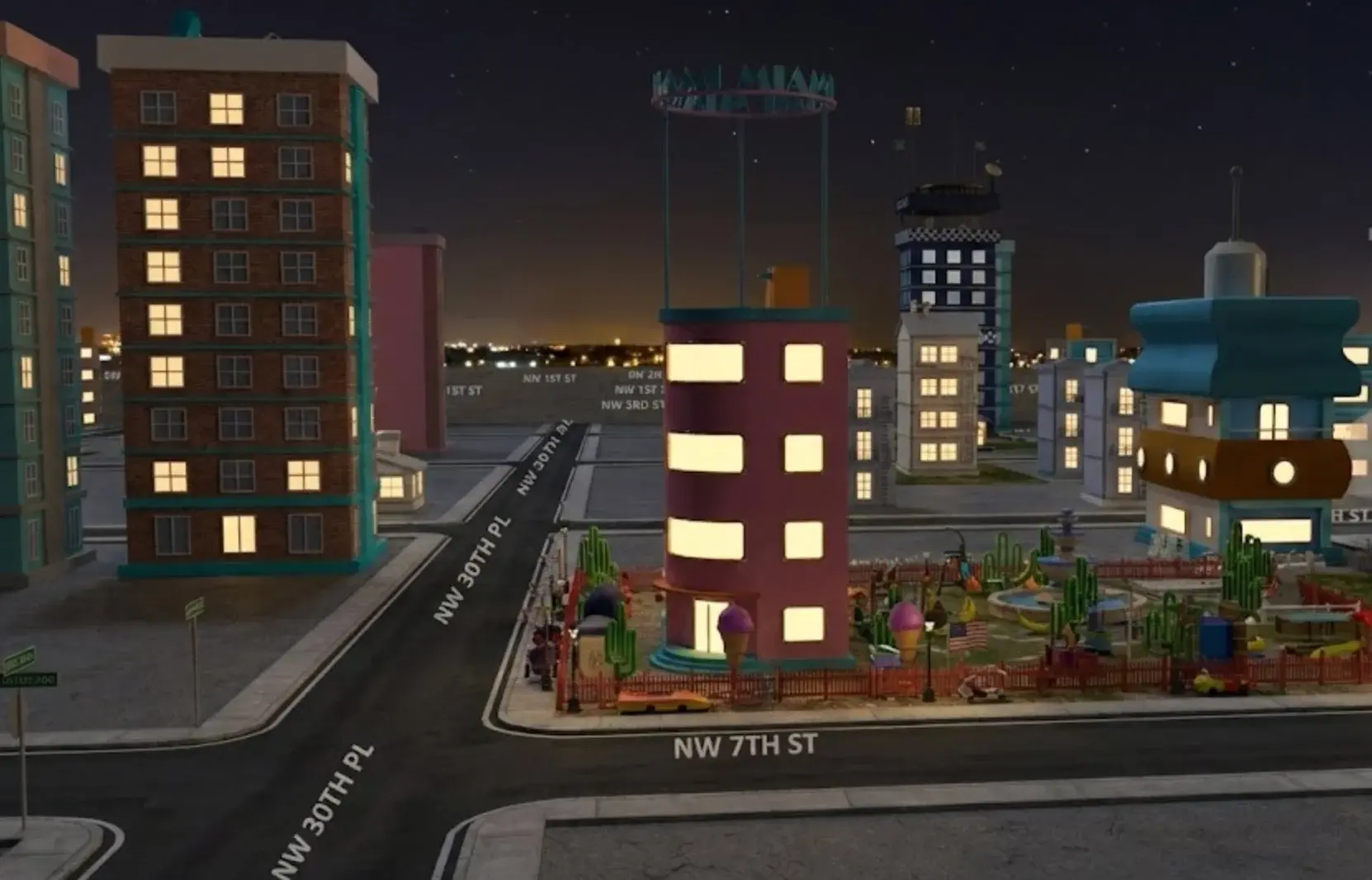
The broader building proposition adds a different motivation. Officially, structures help attract digital residents called Uppies. Editorially, that gives development a more legible purpose than accumulating addresses alone: a neighborhood can become an ongoing design problem. Whether that produces compelling daily sessions remains untested here.
Progression has an early obligation
Upland's status guide ties rank to the combined value of UPX balances and properties. Uplander status begins at 10,000 UPX of in-game net worth.
Before reaching that rank, Visitors must renew their visa every seven days; the guide says missing renewal can cause their assets to be recycled. That requirement materially qualifies the site's broad message of lasting progress. It also makes Upland less suitable for someone expecting to create an account and ignore it indefinitely.
Understanding the economy
The currency guide separates three resources. UPX handles property purchases and other in-game transactions and is not externally tradable. SPARKLET supports construction and production: some tasks allocate it temporarily, while other uses consume it. STEM is an account-bound, non-tradable resource for the game's life systems.
SPARKLET also exists as an ERC-20 token on Ethereum and Base. Separately, Upland announced its move from EOS to its own dedicated appchain in April 2025. Describing the current game simply as an EOS title would miss that migration.
These distinctions matter to play. A construction resource, an internal currency and a tradable token do different jobs. None establishes a predictable return, and this assessment makes no claims about resale liquidity or earnings.
Who the design suits
Upland looks most relevant to patient collectors and builders who enjoy managing several connected systems. Its strongest documented feature is the link between location, development and community activity: different goals can give the same map continuing value.
The tradeoff is complexity. Status rules, resource types and the boundary between announced and released systems require attention. Technical performance, marketplace depth and the enjoyment of repeated sessions have not been independently tested for this review.
The editorial verdict is cautiously positive on the design proposition. Start by deciding whether shaping a neighborhood is interesting in itself. Upland's ownership layer becomes meaningful only if the underlying planning deserves your time.