*By Eric Pierce, CryptoGamesNews Game Senior Editor*
A familiar adventure with an unusual development model
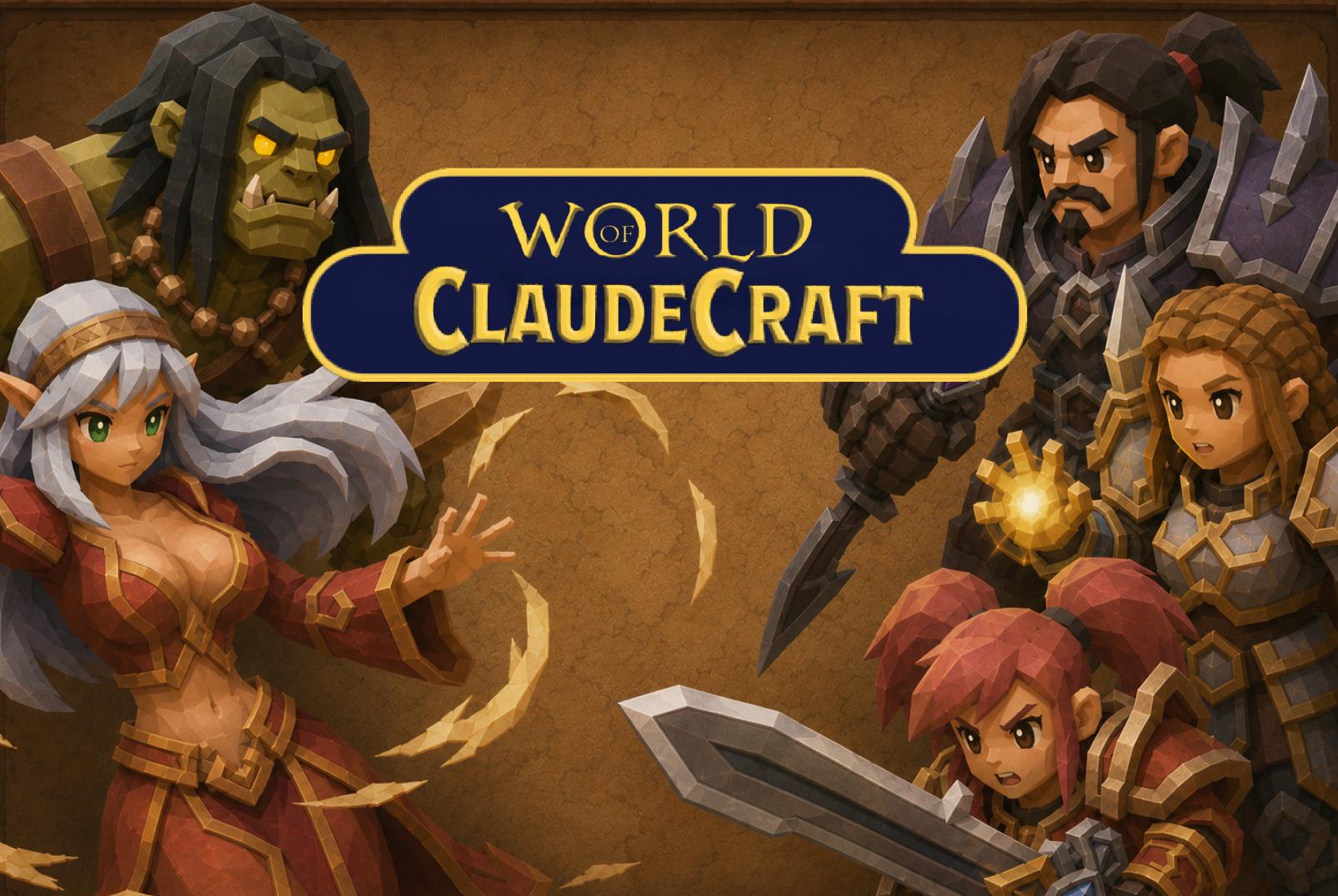
World of ClaudeCraft makes a straightforward pitch: a shared fantasy world that can be entered through a browser. Levy Street, the New Zealand studio behind the project, identifies it as a free, open-source MMO. The official game page currently displays version 0.45.2 and offers online character creation.
This is a review of verified public materials, not a hands-on playtest. The distinction matters particularly for an MMO: a feature list cannot establish how responsive combat feels, how quickly a group forms or whether a long evening of questing stays interesting. Our assessment concerns the documented design and the expectations it sets for prospective players.
The strongest initial proposition is accessibility. Browser entry offers a convenient way to investigate a persistent-world RPG. That convenience is valuable even before considering cryptocurrency, although it does not prove that every device delivers a comfortable experience.
Progression has several destinations
The official project documentation describes nine classes, talents, questing, equipment progression and instanced dungeons. Gathering professions feed crafting, while trading and a player market provide destinations for items. Parties, guilds and a dungeon finder support cooperative play; ranked PvP supplies another progression route.
Editorially, those systems provide a coherent reason to return: improve a character, prepare for a harder encounter and find other players with complementary roles. Crafting could make quieter sessions useful between group outings. The appeal depends on whether those activities reinforce each other without making preparation feel compulsory.
Breadth also creates a testing burden. We have not established class balance, the usefulness of different crafts or how welcoming groups are to new players. Readers should treat the documented options as a shortlist of things to investigate, rather than proof of a mature endgame.
Recent changes show activity and unfinished work
Official releases establish current development beyond a directory listing. The October 25 v0.45.0 notes record dungeon revisions, rebuilt environments and an appearance redesign for existing characters. The October 26 v0.45.2 hotfix restores fixes missed during that integration, including encounter behavior and aspects of PvP and reward eligibility.
That is encouraging evidence of maintenance, but it also exposes the practical cost of rapid iteration. A returning player may need to relearn behavior or check whether a recently encountered problem has been addressed. Release notes show what developers intend to repair; they do not independently demonstrate that every repair works.
For this review, the hotfix is more informative than promotional claims about the size of an update. It suggests evaluating the game as an evolving service, with expectations adjusted to the current build.
Solana is an optional layer
The official website offers Solana wallet verification for WOC holder flair and player-card badges. Its account flow also supports ordinary login. The project documentation describes optional cosmetic purchases and holder rewards, while explicitly marking its player-to-player WOC marketplace as built but disabled.
That distinction prevents a misleading ownership pitch. A documented trading system that is disabled should not be counted as something readers can use today. Nor does a token connection establish an attractive economy. We make no claim about earnings, asset demand or future purchasing power.
Our assessment is that the optional approach makes the game easier to judge on its RPG systems. Players can ask whether they enjoy character development and cooperative encounters before deciding whether the additional wallet features interest them.
Who should consider it?
A current PlayToEarn listing provides a second signal of the project's presence, not evidence of population or quality.
World of ClaudeCraft is most relevant to curious MMO players comfortable investigating a changing project. Its documented progression offers several avenues to explore, and its public development record makes ongoing work visible. Players seeking a settled, independently tested recommendation should wait for hands-on evidence. The promising design is verifiable; the quality of a full play session remains an open question.